To apostille your documents effectively, first determine which one needs the apostille. Research the requirements of the country you are sending the documents to. Obtain certified copies if needed and complete any necessary translations. Identify the relevant authority to apostille your documents. Remember the specific steps for Academic Transcripts, Birth Certificates, Marriage Certificates, and Power of Attorney documents. Each type has its nuances to take into account. Following these steps carefully will help guarantee the smooth international acceptance of your important paperwork.
Determine Document Needing Apostille
Before proceeding with the apostille process, it is important to determine the specific document requiring this authentication. Whether it is a birth certificate, marriage license, diploma, or any other official document, identifying the exact paper that needs an apostille is vital. One key factor to take into account is whether the document needs to be apostilled at the federal or state level based on the requirements of the destination country. Understanding the state where the document originates from is essential as different states may have varying procedures for apostille services. By carefully examining the type of document and the state it is issued from, you can make sure that the apostille is obtained correctly and efficiently. This initial step sets the foundation for a successful apostille process, ensuring that the right document is authenticated for international use within countries that are part of the 1961 Hague Convention.
Research Country Requirements
To effectively proceed with obtaining an apostille for your document, it is essential to thoroughly research and understand the specific requirements of the country where the document will be utilized. Begin by determining whether the destination country is a member of the 1961 Hague Convention, as this will dictate the need for an apostille. It is important to ascertain whether the document requires an apostille or an authentication certificate based on the regulations of the specific country. Additionally, you should verify whether state-issued or federal documents are necessary for authentication purposes. Researching the process and steps involved in obtaining an apostille for the particular country is critical to ensure a smooth and successful authentication process. By familiarizing yourself with the country's requirements for apostilles, you can save time and avoid potential issues when submitting your documents for legalization.
Obtain Certified Copy if Necessary

Before proceeding with the apostille process, it is essential to verify the document requirements in your specific case. If a certified copy is necessary, make sure to request one from the appropriate authority. Additionally, confirm any notarization requirements to guarantee the copy is valid for authentication or apostille purposes.
Verify Document Requirements
When verifying document requirements for apostille purposes, make sure to obtain a certified copy if the original is not available. Confirm that the document meets the specifications set by the Department of State for apostille certification. The Department of State outlines the necessary steps and criteria for obtaining an apostille, including the need for a properly notarized document. If the original document is unavailable, acquiring a certified copy is essential to proceed with the apostille process smoothly. Verify that the document type aligns with the specific requirements for apostille certification, and if necessary, arrange for any translations into English. By following these steps diligently, you can guarantee that your documents are in order for the apostille process.
Request Certified Copy
If handling legal matters, you occasionally need to secure a certified copy of a document, an important step that guarantees its validity and compliance with official requirements. A certified copy is a duplicate of the original document that has been verified by a notary public, confirming its authenticity. These copies are commonly required for legal or official purposes, such as apostille certification. Documents like birth certificates, marriage certificates, or court orders often necessitate certified copies. To obtain one, you may need to submit the original document to a notary for verification. This process confirms that the certified copy is a true replica of the original, meeting the necessary standards for legal and official use.
Confirm Notarization Requirements
To guarantee compliance with apostille requirements, carefully confirm the specific notarization criteria for the document in question. When dealing with notarization requirements, consider the following:
- Check if the document necessitates notarization before proceeding.
- Verify the notarization prerequisites based on the country where the document will be used.
- Obtain a certified copy of the document if the original lacks notarization.
Ensuring the notarization aligns with the specific criteria for apostille certification is essential to prevent delays or rejections during the legalization process. By attentively adhering to the necessary notarization steps, you can streamline the apostille process and facilitate the acceptance of your documents internationally.
Complete Any Translations Required
Verify that all foreign language documents requiring apostille certification have been accurately translated into English by a qualified professional translator. Translations play a vital role in the apostille process, ensuring that the content of the original documents is accurately conveyed in English. It is essential to use a certified translator to guarantee the accuracy and completeness of the translated documents. Incorrect translations can lead to delays, rejection of documents, or the need for additional authentication steps, prolonging the apostille process unnecessarily. Before submitting your documents for apostille, double-check that the translations have been done meticulously and meet the required standards. By ensuring the accuracy of translations, you can streamline the apostille process and avoid complications along the way. Remember, precise translations are key to successful apostille certification, so take the necessary steps to complete any translations required accurately.
Identify Appropriate Authority
After ensuring the accuracy of your document translations, proceed by identifying the appropriate authority for apostille certification based on the country where the document will be utilized. Different countries have varying requirements for apostille or authentication certificates, so it is essential to research and determine the specific authority responsible for apostille services in the country where your document will be used. Here are some steps to help you navigate this process efficiently:
- Research the requirements for apostille or authentication certificates in New York.
- Determine if your document needs an apostille or authentication certificate for acceptance in New York.
- Contact the relevant office or agency in New York to understand the process and requirements for obtaining the necessary certification.
Prepare Necessary Fees

Prepare the necessary fees for apostille services by checking the specific fee information provided by the Secretary of State's office in your state. Fees for apostille services can vary depending on the state you are in and the type of document you need to have apostilled. Some states have a flat fee per document, while others follow a fee schedule based on the document type. It is important to verify the exact fees applicable to your situation by contacting the Secretary of State's office.
Typically, fees for apostille services are payable by check, money order, or credit card. When submitting your documents for apostille, make sure that you include the appropriate fee as specified by the Secretary of State's office. Failure to provide the correct fees may result in delays or rejection of your apostille request. Therefore, it is essential to be diligent in preparing the necessary fees along with your documents to facilitate the smooth processing of your apostille.
Submit Document for Apostille
When submitting your document for an apostille, make sure that it has been notarized with a county or state notary. This step is essential to ensure the authenticity and legality of the document before proceeding with apostille services. Additionally, before submission, confirm that the seals and signatures on the document are original. This helps in avoiding any delays or rejections during the apostille process. Another important point to bear in mind is obtaining certified copies of the document from a notary public specifically for apostille processing.
- Verify the accuracy of all information on the document before submitting it for apostille services.
- Confirm any translations of foreign language documents into English are accurate and complete.
- Double-check that life event records, court documents, and federally-issued documents have been certified at the state level before initiating the apostille application.
Await Processing Time

Upon submitting your document for apostille, the next step is to await the processing time, which can vary depending on the state and may range from a few days to several weeks. It is advisable to check with the relevant issuing authority or their website for estimated processing times. Some states offer expedited services for an additional fee if you require a quicker turnaround. Be mindful that processing times may extend during peak periods or holidays, so it's essential to plan ahead and submit your documents well in advance to allow for any potential delays. By understanding the typical processing times for apostilles in your specific state and taking into account any possible extensions, you can better prepare for the waiting period. Remember to stay informed and patient during this stage of the apostille process to ensure a smooth and timely completion of your document authentication.
Review Apostilled Document
To verify the authenticity of an apostille or certificate of authentication, utilize the Department of State verification option for document credibility. This step is important in confirming the legitimacy of your official paperwork. Here are some key actions to take when reviewing your apostilled document:
- Check for Proper Seals: Verify that the apostille or certificate of authentication bears the official seals of the issuing authority to confirm its validity.
- Match Signatures: Ensure that the signatures on the document match those of the authorized individuals listed by the Department of State.
- Validate Information: Double-check all the information provided on the apostille or certificate of authentication against the original document to spot any discrepancies.
Ensure International Recognition
To ensure international recognition of your notarized documents, obtaining an apostille is vital for validating their legality and authenticity. An apostille certifies the authenticity of signatures and seals on documents, ensuring their acceptance abroad, especially in countries that are part of the 1961 Hague Convention. This international agreement simplifies the process of document authentication by standardizing procedures among member countries, making it easier to verify the legitimacy of important paperwork. Designated authorities in the country of origin issue apostilles to streamline the legalization process and confirm the validity of documents for international use. Without an apostille, your notarized documents may not be recognized or accepted outside your country of origin, potentially causing delays or complications in legal matters or official transactions. Therefore, adhering to the Hague Apostille Convention and obtaining an apostille is essential for ensuring the international recognition and validity of your important paperwork.
Apostille for Academic Transcripts
When considering international recognition of academic transcripts, obtaining an apostille may be necessary to validate their authenticity and legality. Academic transcripts play an important role in proving your educational background and achievements, especially when pursuing opportunities in foreign countries. Here are some key aspects to understand about obtaining an apostille for academic transcripts:
- Verification of Signatures: The apostille process ensures that the signatures on your academic transcripts are genuine and have been verified by the issuing authority.
- Legalization of Seals: Apostilles also authenticate the seals present on your academic transcripts, confirming that they are official and valid.
- International Acceptance: Apostilled academic transcripts are widely accepted for various purposes abroad, including further education, job applications, and professional licensing.
Apostille for Birth Certificates
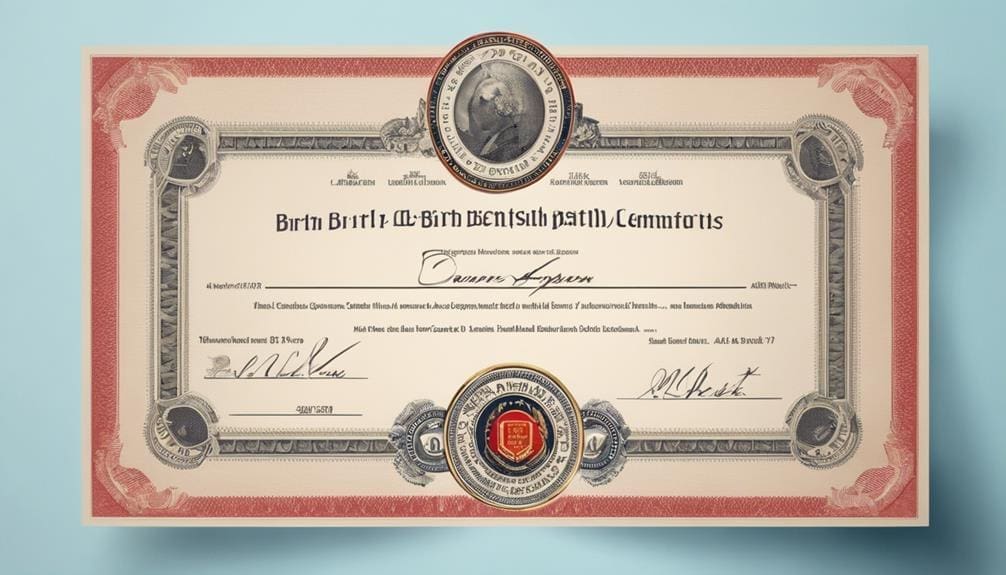
Obtain an apostille for your birth certificate to facilitate its international recognition in Hague Convention countries. Apostilles for birth certificates are essential for ensuring their validity and authenticity when used abroad. To obtain an apostille for your birth certificate, you must first confirm that it has been notarized and authenticated by the state's Secretary of State. Original birth certificates with notarized signatures and seals are mandatory for the apostille process. This certification simplifies the legalization procedure for various international transactions or residency applications, as it confirms the birth certificate's legitimacy for foreign government acceptance. By obtaining an apostille for your birth certificate, you can expedite processes requiring proof of identity or citizenship in countries that are part of the Hague Convention, making it easier to navigate legal matters and official transactions seamlessly.
Apostille for Marriage Certificates
How important is obtaining an apostille for your marriage certificate when seeking international recognition? Apostille for marriage certificates holds significant importance for international validation. Here are three key points to take into account:
- International Recognition: An apostille for marriage certificates is vital for marriages conducted in countries that are part of the 1961 Hague Convention. Without this apostille, your marriage certificate may not be recognized in foreign countries.
- Validity Assurance: The apostille process guarantees the validity of your marriage certificate abroad. It acts as a stamp of approval, confirming that the document is legitimate and can be trusted.
- Legalization and Authentication: Obtaining an apostille for your marriage certificate is essential for legalizing and authenticating the document for use in international transactions, such as visa applications or residency permits.
Ensuring that your marriage certificate has the necessary apostille will help streamline processes and ensure smooth acceptance of your marital status in foreign jurisdictions.
Apostille for Power of Attorney
Securing an Apostille for your Power of Attorney document is a vital step in ensuring its international validity and recognition. The apostille serves as a verification of the authenticity of the Power of Attorney document, making it acceptable in foreign countries. It specifically certifies the signature and seal of the notary public who notarized the Power of Attorney. It is important to note that different countries may have specific requirements regarding the apostille process for Power of Attorney documents. Thus, it is necessary to understand the particular regulations of the country where the document will be used. The process of obtaining an apostille for a Power of Attorney may vary depending on the country in which it will be utilized. Ensuring that your Power of Attorney document has the necessary apostille will facilitate its acceptance and legal recognition in international jurisdictions, providing you with the assurance that your document is valid and binding.
Frequently Asked Questions
How Do I Apostille a Document?
To apostille a document, you need to make sure it's notarized with original seals and signatures. Different rules apply for state and federal documents. For non-Hague Convention countries, state documents need apostille; federal documents may require U.S. Department of State apostille. Verify signatures, stamps, or seals based on the country's requirements. This process certifies your document for use in countries under the 1961 Hague Convention.
How to Get Documents Apostilled in the Us?
Like a code opening a treasure chest, document authentication in the U.S. involves obtaining an apostille from the Secretary of State's office or a Notary commissioning agency. These apostilles validate Notary seals and signatures for acceptance in countries part of the Hague Apostille Convention. For countries outside the Convention, authentication certificates are needed, requiring additional certifications. Notaries can assist as couriers to state apostille agencies for a smooth authentication process.
How Much Does an Apostille Cost in New York?
In New York, the cost of an apostille is $10 per document. Be aware that additional fees might be required for expedited processing. The payment methods can vary, so make sure to verify with the specific office. The fee for an apostille is determined by the New York State Department of State. It's advisable to confirm the current cost before submitting your documents for the apostille process.
How Many Days to Process an Apostille?
When it comes to apostille processing time, it's like waiting for a fine wine to mature—you need patience. Factors such as the state and type of document can influence the timeline. Some states move swiftly in just a few days, while others may take weeks. To get an accurate estimate, reach out to the Secretary of State office in your state. Consider submitting documents well ahead of deadlines to allow for processing times.