When obtaining a Department of State Apostille, make sure your documents are intended for use in Hague Convention countries. Provide original or certified copies notarized by a county or state notary, with translations if needed. Complete the Apostille Application Form (DS-4194) accurately and include it with your submissions. Confirm all documents have genuine seals, signatures, and stamps. Department of State apostilles authenticate federal government documents for international use, important for cross-border transactions. Understanding the Hague Convention and apostille requirements is essential for successful authentication. The significance of apostille recognition lies in simplifying the legalization process for international document use.
Eligibility for Apostille
When seeking an apostille, it is important to ascertain the eligibility of your document based on the country of intended use and its origin as either federal or state-issued. Apostilles are only issued for documents intended for use in countries that are part of the 1961 Hague Convention. State-issued documents require apostilles for non-Hague Convention countries, while federal documents in Hague Convention countries may receive apostilles from the U.S. Department of State. These apostilles serve to authenticate the signatures, seals, and stamps on documents, guaranteeing their validity internationally.
The U.S. Department of State plays a vital role in issuing apostilles for federal documents, certifying their authenticity for use in Hague Convention countries. Understanding the distinction between federal and state-issued documents is essential to determine the appropriate authentication process required for your specific situation. By adhering to these guidelines and regulations, you can ensure that your document meets the necessary criteria for receiving an apostille from the Department of State, making it recognized and accepted in the relevant countries.
Required Document Submission
When submitting documents for apostille certification, it is important to provide either original documents or certified copies. Make sure that all documents have been notarized by a county or state notary and that all seals, signatures, and stamps are genuine. Additionally, remember to include translations of any foreign language documents into English for submission.
Document Notarization Process
Have you notarized each document with a county or state notary before submitting for an apostille? It is important to follow the proper procedures to ensure your documents are accepted for apostille processing. Here are some key points to keep in mind:
- Make sure the seals and signatures on the documents are original to meet the requirements.
- Obtain certified copies of the documents from a notary public for apostille processing.
- Translate any foreign language documents into English before submitting for authentication.
Apostille Application Form
Completing the Apostille Application Form accurately and thoroughly is essential for initiating the authentication process through the U.S. Department of State. The DS-4194 form is required when requesting authentication services and must be included with your document submissions. Providing all necessary details on the Apostille Application Form guarantees that your apostille request is processed efficiently and accurately. Failure to submit this form may lead to delays in processing your authentication request. Hence, it is vital to fill out the Apostille Application Form, DS-4194, with precision to avoid any setbacks in obtaining the apostille for your documents. Make sure to adhere to the guidelines and requirements outlined in the form to facilitate a smooth authentication process.
Submission Requirements Checklist
In order to guarantee a smooth and successful authentication process through the U.S. Department of State, it is important that all submitted documents are notarized by a county or state notary beforehand. When preparing your submission for an apostille, make sure that you have:
- Original seals and signatures on all documents.
- Certified copies of the documents from a notary public.
- Translations of any foreign language documents into English before submission.
Department of State Submission Process
How can you guarantee that your documents meet the specific requirements for Department of State submission for authentication or apostille? Ensuring that your documents adhere to the Department of State submission process is vital for obtaining the necessary authentication or apostille. The submission process involves submitting your documents, which should be notarized and contain original seals and signatures, by mail to the Department of State. Once received, the processing time typically takes around 4 weeks. It is important to note that a $20 fee per document is required for authentication services.
Apostille Request Form
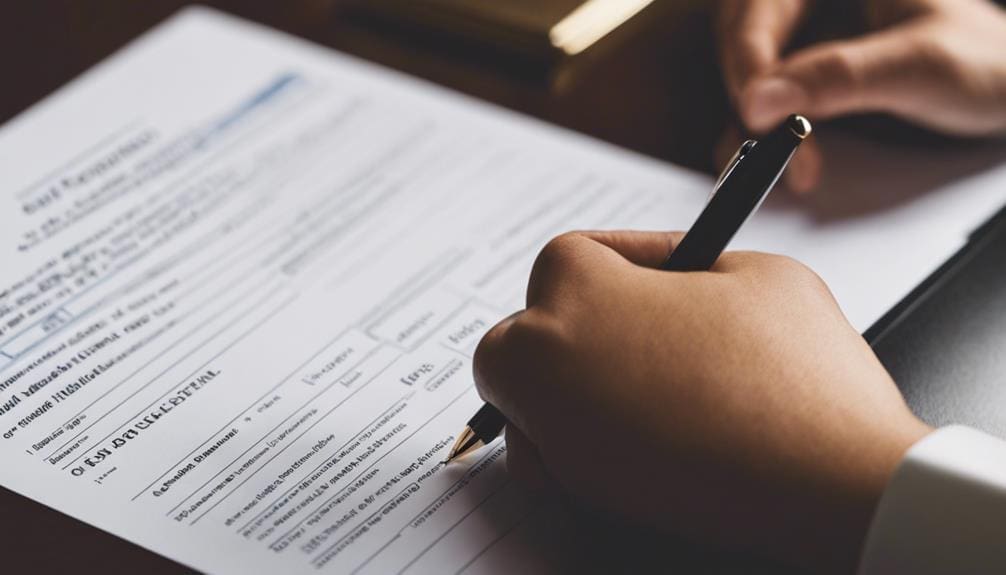
When completing Form DS-4194 for an apostille request, make sure all required information is accurately provided. Include all necessary documents and details to initiate the apostille process successfully. Submit the form with the applicable fee to the U.S. Department of State for processing.
Required Information for Form
Accurate completion of the required information on the Apostille Request Form is crucial for the successful processing of your apostille request. When filling out the form, make sure to provide the following details with precision:
- Document type, including title and purpose for use.
- Signatory information, such as the name and position of the individual signing the document.
- Issuing authority details, specifying the organization or entity responsible for issuing the document.
Submission Process Details
To successfully submit your Apostille Request Form for processing, it is vital to closely adhere to the outlined instructions and requirements provided by the Department of State. When submitting Form DS-4194 for apostille services, make sure all required documents and payment are included with the form. Accuracy and completeness of the information on the form are essential, so double-check the submission before sending it off. Follow the specific instructions for the submission process to avoid any delays in processing your request. By carefully following these guidelines, you can facilitate a smooth and efficient processing of your apostille request through the Department of State.
Fee Payment Guidelines
The Department of State apostille services require a fee of $20 per document, payable by check or money order to the U.S. Department of State. When submitting your payment, please guarantee the following guidelines are met:
- Payment must be made using a check or money order.
- Temporary, starter, or bank fill-in checks are not accepted.
- Check numbers must be over 100 and dated within the last six months.
Adhering to these guidelines will help facilitate the processing of your apostille request efficiently. It's vital to follow the specified payment methods and requirements to avoid any delays or issues with your submission. The $20 fee covers all services provided by the Department of State, including handling rejections and any additional certification needs you may have. By complying with the fee payment guidelines, you contribute to a smooth and seamless apostille process, ensuring your documents are authenticated promptly and accurately.
Specific Apostille Process Guidelines
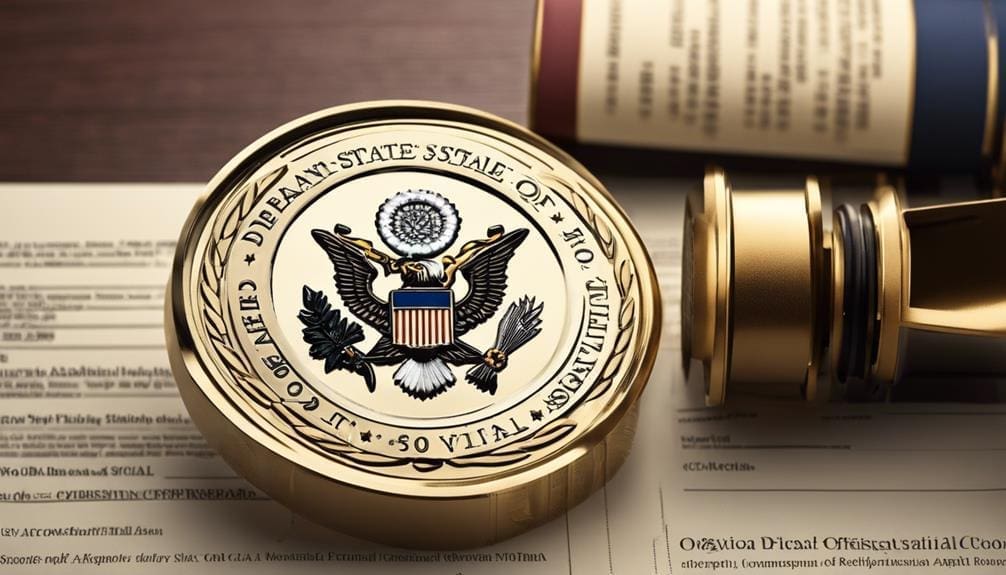
Understanding the specific apostille process guidelines is essential for guaranteeing the proper authentication of your documents based on their type and origin. When dealing with federal documents, the process for obtaining an apostille involves the U.S. Department of State. Federal documents have distinct requirements compared to state-issued documents. For state-issued documents destined for Hague Convention countries, authentication typically occurs at the state level. It is vital to grasp the nuances of the document type to navigate the correct apostille process guidelines effectively. The authentication procedures for federal and state-issued documents can vary greatly, so attention to detail is paramount. By following the specific guidelines laid out for the authentication of federal and state-issued documents, you can streamline the apostille process and ensure that your paperwork meets the necessary requirements for international use. Familiarizing yourself with these distinctions will help you navigate the apostille process with confidence.
Document Authentication Completion
In completing document authentication, it is essential to secure either an apostille or a certificate of authentication depending on the intended country of use. When dealing with the Department of State for this process, understanding the distinction between these two forms of validation is vital. Here are some key points to keep in mind:
- Apostilles are specifically for countries that are members of the Hague Convention, simplifying the legalization process for documents destined for these nations.
- Authentication certificates are necessary for countries that are not part of the Hague Convention, requiring additional steps to validate the document's authenticity.
- The verification of signatures, stamps, and seals plays an important role in ensuring that the document meets the standards set by the Department of State for document authentication.
Hague Convention Recognition
When considering Hague Convention recognition in the apostille process, it is crucial to understand the overview of the convention and the specific requirements for obtaining an apostille. This recognition guarantees that documents can be easily accepted in member countries, simplifying the validation process for international use. By adhering to the standardized procedures of the Hague Convention, you can navigate the complexities of apostille issuance with confidence and guarantee the credibility of your documents across borders.
Hague Convention Overview
The Hague Convention, an international treaty simplifying document authentication for member countries, encompasses 116 nations within the 1961 agreement that acknowledge apostilles. Under this convention:
- Member countries acknowledge apostilles as a valid form of document authentication.
- Apostilles issued under the Hague Convention streamline the process of verifying documents for international use.
- The Hague Convention sets standards for the authentication of public documents to guarantee their validity across borders.
These aspects highlight the significance of the Hague Convention in facilitating the recognition and acceptance of apostilled documents among member nations, promoting international cooperation and trust in document verification processes.
Apostille Requirements Explained
Understanding the process of obtaining an apostille under the Hague Convention requires a clear understanding of the specific requirements set forth by member countries for document authentication. Apostille requirements, guided by the Hague Convention, guarantee that federal documents intended for international use are properly certified. Only countries that are part of the Hague Convention have the authority to issue or accept apostilles. In Hague Convention countries, apostilles are essential for federal documents to validate their authenticity. Conversely, for documents destined for non-Hague Convention countries, state-level apostilles are necessary. These apostilles play a vital role in the verification process, affirming the legitimacy of official documents for cross-border transactions and legal purposes.
Federal Document Apostille Validity
For federal documents to be valid for use in countries part of the 1961 Hague Convention, they must obtain an apostille from the U.S. Department of State. When dealing with federal document apostilles, it is essential to understand their validity and specific requirements:
- Applicable Countries: Federal document apostilles are exclusively recognized in countries that are signatories to the 1961 Hague Convention, ensuring their acceptance and legality abroad.
- Mandatory Information: Apostilles for federal documents must contain precise details such as the signature, name, title, and agency seal of the authorized individual issuing the document.
- Non-Hague Convention Countries: Apostilles are not issued for federal documents destined for use in countries that are not part of the Hague Convention, necessitating alternative legalization procedures for these jurisdictions.
Understanding the nuances of federal document apostilles and their validity under the Hague Convention is essential for ensuring the smooth acceptance and use of these documents in international settings.
Department of State Apostille Usage
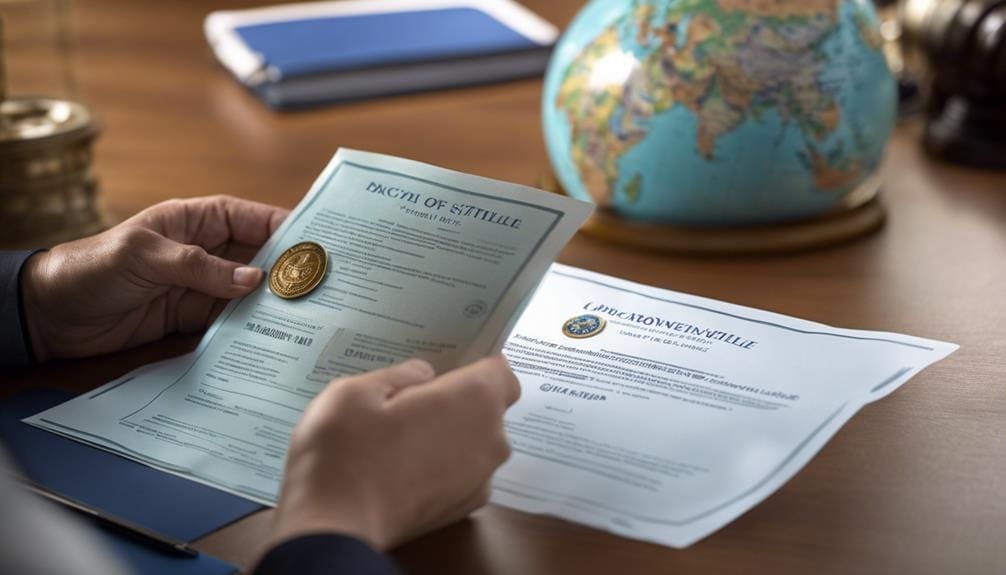
To effectively utilize Department of State apostilles, make sure federal government documents required for international use in Hague Convention countries are properly certified. The Department of State apostille certifies federal documents like court orders, contracts, and vital records, ensuring their authenticity and validity abroad. When submitting federal documents for an apostille, it is important that they bear the signature, name, title, and seal of the issuing agency. It is noteworthy that apostilles are not issued for state-issued documents; these require authentication certificates instead. By following the Department of State apostille process, you guarantee the credibility of your federal documents and provide assurance to authorities in Hague Convention countries. This process plays a critical role in preventing fraud and facilitating the acceptance of your documents internationally. Hence, make sure that your federal documents are appropriately certified with a Department of State apostille before presenting them in a foreign jurisdiction.
Hague Convention Member Countries
Recognition of apostilles by Hague Convention member countries signifies a streamlined authentication process for international document validation. When dealing with countries that are part of the Hague Convention, you can expect the following:
- Efficient Process: Apostilles guarantee a quicker and more straightforward authentication process for documents intended for use in Hague Convention countries.
- Global Acceptance: Apostilles issued by the U.S. Department of State are recognized by all Hague Convention member countries, facilitating international document recognition.
- Mutual Agreement: Countries within the Hague Convention have mutually agreed to accept apostilled documents from each other, fostering trust and cooperation in document authentication processes.
Being part of the Hague Convention simplifies the authentication of documents for international use, making it easier for individuals and businesses to navigate the complexities of cross-border transactions and legal matters.
Importance of Apostille Recognition
Apostille recognition plays a crucial role in validating the authenticity of documents for international use in Hague Convention member countries. The 1961 Hague Convention established the Apostille as a simplified method for verifying the legitimacy of official documents. Through apostille recognition, the authority of signatures, seals, and stamps on documents issued by government officials is confirmed, ensuring their acceptance abroad. Without apostille recognition, these documents may face challenges in being acknowledged or validated in foreign nations. The Hague Apostille Convention greatly streamlines the legalization process, facilitating the international usability of documents. By adhering to apostille requirements, individuals and organizations can expedite the validation of their paperwork for use in countries that are part of the Hague Convention, ultimately promoting smooth international transactions and legal processes. Understanding the importance of apostille recognition is fundamental for anyone seeking to authenticate documents for international purposes efficiently.
Apostille for International Document Use
When authenticating documents for international use, it becomes essential to secure an apostille for validation in Hague Convention member countries. This process guarantees that your important papers are recognized and accepted abroad. Here are some key points to keep in mind:
- Federal Documents: Federal documents, such as FBI background checks or documents from federal courts, require a U.S. Department of State apostille for international validity.
- State-Issued Vital Records: Vital records like birth certificates, marriage certificates, and adoption papers must obtain the state's apostille for international recognition.
- Certifying Authenticity: Apostilles certify the authenticity of various important documents, including court orders, contracts, educational diplomas, and more.
Understanding the specific requirements for apostille authentication can help you navigate the process smoothly. Remember, having the correct apostille from the relevant authorities is essential when using your documents internationally.
Frequently Asked Questions
How Long Does It Take to Get an Apostille From the U.S. Department of State?
When pondering the processing times for a Department of State Apostille, you might be interested in how long it takes to receive one. The average duration for this process is approximately 4 weeks. While expedited options may be available, it's important to take into account the standard wait times. Understanding this timeline can help you plan accordingly for any international document authentication needs.
Where Can I Get Documents Apostilled in Usa?
You can get documents apostilled in the USA through local services or online options. Notary public services are available for certifying documents, and the Secretary of State can authenticate them. Different document types may require specific fees for apostille services. Expedited services are offered for urgent needs, while standard processing times are also available. Be sure to check the requirements and fees associated with apostilling your documents in the USA.
How Do I Get an Apostille Stamp in the Us?
When you need an apostille stamp in the US, start with document preparation. Make sure your paperwork is complete and accurate. Next, visit a notary for authentication services. They will verify your documents before the apostille process. This step is important for international recognition. Remember, original seals and signatures are required for the apostille to be valid. Stick to these steps for a smooth apostille experience.
How Do I Apply for an Apostille?
When applying for an apostille, make sure your document is for use in a Hague Convention country. State-issued documents need state authentication for these countries, while federal documents require a U.S. Department of State apostille. After notarization and verifying original seals and signatures, submit your documents following specific procedures. Be prepared with the necessary documents, processing fees, and meeting notary public requirements for a smooth application process. Ensure that you thoroughly research the guidelines specific to your state or jurisdiction, as requirements can vary. For instance, the Virginia State Apostille process involves submitting your documents to the Office of the Secretary of the Commonwealth for proper authentication. Double-checking all details and adhering to submission protocols will help avoid delays in processing your request.