


To grasp the concept of apostilles, understand they're official certifications validating public officials' signatures and seals for international use. They don't verify document content but ensure authenticity in Hague Convention countries. Apostilles authenticate characteristics like capacity and seals, streamlining the legalization process. They're essential for international document verification and cross-border transactions, offering a standardized method for recognition. By learning more about apostilles, you gain insight into their key role in international authentication processes.
Definition of Apostille
The apostille is a legally binding certification that verifies the authenticity of a public official's signature and seal on a document intended for international use. This authentication process is essential for guaranteeing the validity of public documents when presented in foreign countries. When a document receives an apostille, it confirms that the signature, capacity, and seal of the public official on the document are genuine. This certification simplifies the acceptance of documents by countries that are part of the 1961 Hague Convention, as it eliminates the need for further legalization by foreign embassies or consulates. It is important to note that the apostille does not validate the contents of the document; rather, it focuses solely on verifying the authority of the public official who has signed and sealed it. Designated authorities, such as the Secretary of State's office or federal court clerks, issue apostilles to ensure the international recognition of public documents.
Purpose of Apostilles
In facilitating international document verification, apostilles play an essential role in validating the authenticity of public officials' signatures. When a state issues an apostille for a document, it serves the purpose of:
- Authentication: Apostilles authenticate the signature, capacity, and seal/stamp of public officials on documents issued within a state.
- Standardization: Apostilles follow a standardized format recognized by countries party to the Hague Convention, ensuring uniformity in the verification process.
- Simplification: Apostilles streamline the legalization process by eliminating the need for further certification, making document authentication more efficient.
- Limitation to Signatures: Importantly, apostilles do not validate the content of the document itself, focusing solely on verifying the legitimacy of the signatures and seals affixed to the document.
Understanding the purpose of apostilles is important in comprehending their role in international document authentication, providing clarity on their significance in the verification process.
Significance of Apostilles
Apostilles hold significant importance in the legal validation process by verifying the authenticity of public official signatures on documents intended for international use. They play a pivotal role in facilitating cross-border transactions by certifying the capacity and seal of the signatory. With standardized recognition among Hague Convention member countries, apostilles streamline the authentication process, enhancing efficiency and reliability in international document authentication.
Legal Validation Process
To guarantee the authenticity and international validity of public documents, the legal validation process through apostilles plays a significant role in simplifying cross-border transactions. Here is a breakdown of the steps involved in the legal validation process:
- Contact the Secretary of State where the document originated to request an apostille.
- Submit the document to the Secretary of State for verification of the official's signature and seal/stamp.
- Once verified, the apostille is attached to the document, certifying its authenticity for international use.
- The document is now ready for acceptance in foreign countries without the need for further certification, streamlining the process of cross-border transactions.
International Document Authentication
The authentication of international documents through apostilles plays a crucial role in ensuring their validity across borders. Apostilles authenticate the signatures of public officials on documents, certifying the official's signature, capacity, and seal/stamp but not the contents of the document. Recognized by countries that are part of the 1961 Hague Convention Treaty, apostilles streamline the legalization process by eliminating the need for further certification. It is important to note that while apostilles validate the authenticity of the signature and seal, they do not verify the content of the document itself. This standardized method of authentication simplifies cross-border transactions, providing assurance and confidence in the legitimacy of international documents.
Simplifying Cross-Border Transactions
When traversing international document authentication processes, understanding the significance of apostilles in simplifying cross-border transactions is essential for ensuring smooth and efficient legalization procedures.
- Apostilles streamline the process of legalizing and authenticating public documents for international use.
- Issued by designated authorities like the Secretary of State's office or U.S. federal court clerks.
- Typically, apostilles negate the need for additional certification by foreign embassies or consulates.
- Applicable to countries that are part of the 1961 Hague Convention Treaty.
It's vital to verify with the specific embassy or consulate of the destination country for any exceptions or additional requirements when dealing with document authentication in a foreign country.
Issuing Apostilles
When issuing apostilles, you must make sure that your documents are legalized for international use. This process simplifies the authentication process and guarantees the validity of your important papers. Understanding the steps involved in this procedure is essential for international transactions and legal matters.
Legalizing Documents for International Use
To legalize documents for international use by obtaining an Apostille, you must authenticate public officials' signatures on the relevant paperwork. When pursuing this process, keep the following essential points in mind:
- Confirm that the document requiring authentication has been notarized by a public official.
- Verify that the Apostille certifies the signature, capacity, and seal/stamp of the official but not the document's contents.
- Validate that the destination country is a member of the 1961 Hague Convention Treaty recognizing Apostilles.
- Understand that Apostilles generally eliminate the need for additional certification from foreign embassies or consulates.
Simplifying Authentication Process
Streamlining the authentication process for international document use becomes more streamlined with Apostilles, which certify the signature, capacity, and seal/stamp of public officials. As established by the Hague Convention Treaty of 1961, Apostilles adhere to standardized forms that are recognized by member countries, such as the United States. Typically issued by the Secretary of State's office or other designated authorities like U.S. federal court clerks, Apostilles eliminate the need for further certifications by foreign embassies or consulates within Hague Convention countries. It is important to note that Apostilles are specific to Hague Convention members and are not interchangeable with other forms of authentication like certifications. This standardized process guarantees efficiency and validity in the authentication of international documents.
Ensuring Document Validity
Issuing Apostilles involves verifying the signatures and seals of public officials on documents intended for international use in accordance with the Hague Convention of 1961. To verify document validity through authentication, consider the following:
- Verification Process: Public officials' signatures and seals are authenticated.
- Hague Convention Compliance: Confirms adherence to international standards.
- Elimination of Further Certification: Apostilles negate the need for embassy or consulate certifications.
- Destination Country Requirements: Apostilles vary based on the specific requirements of the country where the document will be used.
Validity of Apostilles
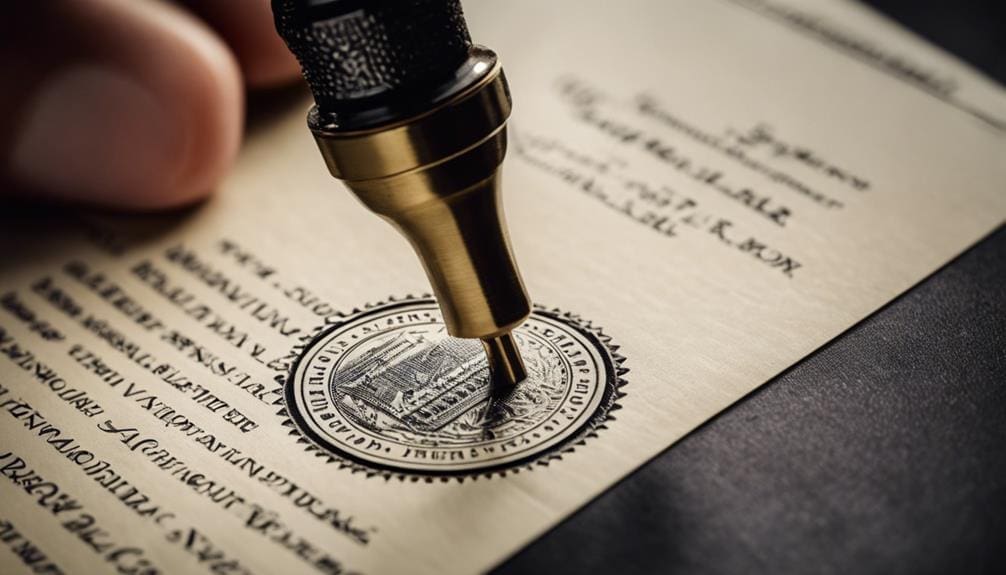
The importance of Apostilles lies in their confirmation of the authenticity of the signature, capacity, and seal/stamp of a public official on a document for international use. An Apostille does not verify the content of the document but rather the details of the public official who has signed, sealed, or stamped it. This authentication process is vital for cross-border recognition and acceptance. Recognized by countries within the 1961 Hague Convention, Apostilles streamline the legalization of documents by negating the necessity for additional certifications. The Hague Convention guarantees that Apostilles are universally accepted, simplifying the process of validating documents for international use. By endorsing the credibility of the public official's signature and seal, Apostilles provide a standardized method for verifying the origin of documents, promoting trust and efficiency in international transactions. This confirmation of authentication by Apostilles eliminates the need for further validation through foreign embassies or consulates, facilitating smoother international document exchanges.
Apostille Requirements
When preparing documents for international use, understanding and adhering to Apostille requirements is essential to guarantee proper authentication. To make sure your documents meet the necessary standards for an Apostille, consider the following key points:
- Hague Apostille Convention: Apostilles are required for documents intended for countries that are party to the Hague Apostille Convention of 1961. It is vital to verify if the destination country is part of this convention to determine if an Apostille is necessary.
- Documents Issued: The purpose of an Apostille is to authenticate the signature and seal of a public official on a document for international use. Only official documents issued by recognized authorities are eligible for Apostille authentication.
- Authentication for Use: Apostilles simplify the legalization process by eliminating the need for additional certifications or validations. This authentication ensures the document's validity and credibility for use in foreign countries.
- Language Considerations: Documents in languages other than English can receive an Apostille if they have been notarized in English. It is essential to fulfill all language requirements to facilitate the Apostille process effectively.
Apostille Process Explained
To understand the Apostille process thoroughly, it is important to grasp its specific steps and requirements for authenticating documents for international use. The Apostille process is a vital step in guaranteeing the validity and acceptance of public documents in countries that are party to the 1961 Hague Convention. When a document receives an Apostille, it means that the signature, capacity, and seal or stamp of the public official who issued the document have been certified. It is important to note that the Apostille does not authenticate the content of the document itself, only the aforementioned attributes.
The authentication of public documents through the Apostille process eliminates the need for further certification and simplifies the legalization process for international use. By adhering to the guidelines set forth by the Hague Convention, countries agree to recognize Apostilles as a valid form of authentication for public documents. This standardized process ensures smoother international transactions and legal proceedings involving public documents.
Apostille Vs. Authentication
For countries that are not part of the Hague Apostille Convention of 1961, the process of authentication certificates becomes necessary to validate documents for international use. When deciding between an apostille and an authentication certificate, understanding the destination country's requirements is vital. Here's a breakdown to help you differentiate between the two:
- Hague Convention: Apostilles are utilized for countries that are part of the Hague Apostille Convention of 1961, streamlining the legalization process.
- Type of Certification: Apostilles verify Notary seals and signatures for international acceptance, while authentication certificates require multiple certifications, including notarization and State Department certification.
- Notary's Role: Notaries do not issue apostilles; however, they can assist by offering apostille services as a courier to state apostille agencies.
- Document Validation: Apostilles are generally simpler and more widely accepted, making them a preferred choice for international document validation.
Understanding the distinction between apostilles and authentication certificates is essential for ensuring your documents are recognized abroad.
Apostille for International Use
When obtaining an Apostille for international use, it is important to understand the legalization process overview and have a checklist of required documents ready. This guarantees a smooth and efficient authentication process for your documents to be recognized in countries party to the Hague Convention. Familiarizing yourself with these points will help streamline the Apostille procedure and avoid unnecessary delays.
Legalization Process Overview
The process of obtaining an Apostille for international use involves authentication of the signature and seal of a public official on a document. To provide you with an overview:
- Contact the Secretary of State's office or the designated authority in your country to inquire about the Apostille process.
- Submit the document requiring authentication along with any necessary fees to the appropriate office.
- The office will verify the signature and seal of the public official on the document.
- Once verified, the Apostille certificate will be issued, simplifying the legalization process for international use within countries that are part of the Hague Convention.
Required Documents Checklist
To guarantee successful authentication of your documents for international use through an Apostille, the following checklist of required documents is essential. Original documents such as birth certificates, marriage certificates, powers of attorney, and court documents may need an Apostille, especially for countries part of the Hague Apostille Convention. Notarized documents must feature a valid Notary seal and signature to qualify for Apostille issuance. The process entails submitting the original document to the Secretary of State's office or the designated authority for authentication. Apostilles play an important role in simplifying the validation of documents internationally by verifying the authenticity of the Notary's signature and seal. Make sure your documents meet these criteria to ensure a smooth Apostille process for international acceptance.
Apostille Benefits
Apostille Benefits greatly expedite the process of legalizing public documents for international use. Here are four key advantages of using apostilles:
- Simplified Legalization: Apostilles simplify the authentication process by validating the signature, capacity, and seal of the issuing official, streamlining international document recognition.
- Hague Convention Compliance: Being part of the Hague Convention of 1961, apostilles are recognized among member countries, eliminating the need for additional certifications and ensuring global acceptance.
- Authenticity Verification: While apostilles do not verify the content of the document, they guarantee the authenticity of the signature and seal, providing assurance to foreign authorities.
- Designated Issuing Authorities: Apostilles are typically issued by the Secretary of State's office or other designated authorities, not by Notaries, ensuring uniformity and reliability in the legalization process.
Frequently Asked Questions
What Is the Concept of Apostille?
When you wonder about the concept of apostille, it's all about understanding its significance in international recognition of legal documents. This concept explanation revolves around a specialized certificate that validates a public official's signature, ensuring its authenticity for use abroad. This official stamp simplifies the legalization process, bridging the gap between different countries by confirming the credibility of signatures and seals on important paperwork.
What Is the Other Meaning of Apostille?
When it comes to the other meaning of apostille, it refers to legal authentication granted by government authorities for international recognition. This approval confirms the validity of official signatures, capacity, and seals on documents. By obtaining an apostille, you can skip the additional certification process through foreign embassies. Understanding these requirements is crucial to guarantee smooth document acceptance in international jurisdictions.
What Does Apostille Translate to in English?
In English, 'Apostille' translates to 'certification' or 'authentication.' This meaning holds significant importance for legalizing documents for international use. Understanding this interpretation is important for navigating the complexities of cross-border transactions. It signifies the verification of a public official's signature and seal on a document, simplifying the process for member countries of the Hague Convention. Apostilles play a key role in facilitating international agreements and transactions.
What Are the Apostilles in the Us?
When it comes to the apostille process in the US, it's crucial to understand the requirements and international recognition involved. Apostilles authenticate signatures on documents for global use, certifying official signatures, capacity, and seals/stamps. This standardized form simplifies legalization by eliminating the need for additional certification. Remember, apostilles focus on verifying signatures and seals, not the document's contents. These measures guarantee smooth international transactions and legal processes.