


In Florida, the Secretary of State's key duties include overseeing elections, managing business registrations, maintaining records, ensuring voter registration, promoting transparency, and safeguarding governance. They serve as the Chief Election Officer, ensuring fair voting processes, and upholding election integrity. Their responsibilities also involve preserving historical records, supporting voter participation, and maintaining governmental integrity. These pivotal roles contribute to the state's governance, historical preservation, and accountability. Understanding these responsibilities provides insight into the essential functions of the Secretary of State in Florida.
Electoral Oversight
As the Chief Election Officer, the Secretary of State in Florida meticulously oversees the state's electoral processes to uphold the integrity of elections. Their role is vital in guaranteeing that voter registration, ballot access, and election result certification are managed efficiently and transparently. By enforcing election laws and regulations, the Secretary of State works diligently to maintain the fairness and accuracy of the electoral system in Florida.
In addition to managing these key aspects of the electoral process, the Secretary of State collaborates closely with county supervisors of elections to coordinate and administer elections effectively. This collaborative effort helps to streamline procedures, resolve any issues that may arise, and ensure that voters can confidently participate in the democratic process.
Moreover, the Secretary of State takes on the responsibility of educating voters on their rights and responsibilities in the electoral process. By providing information and guidance, they empower individuals to make informed decisions and actively engage in shaping the future of Florida through their votes.
Business Registrations
The supervision of electoral processes seamlessly transitions into the world of business registrations under the purview of the Secretary of State in Florida. In the Sunshine State, all business entities must register with the Secretary of State to operate legally. This process guarantees compliance with state laws governing business formations and operations, fostering a transparent and accountable business environment. By mandating business registrations, the Secretary of State plays a vital role in upholding the integrity of Florida's commercial landscape. Through the provision of resources and tools, the office assists businesses in managing the registration procedures efficiently, promoting a smooth entry into the market. This emphasis on compliance not only benefits individual businesses but also contributes to the overall transparency and credibility of Florida's business sector. As a business owner in Florida, engaging with the Secretary of State for your registration needs ensures alignment with state regulations and supports the state's commitment to a fair and open business environment.
Record Maintenance

When it comes to record maintenance, the Secretary of State in Florida handles vital tasks such as implementing document organization systems, filing and indexing methods, and digital record preservation. These responsibilities are crucial for the proper storage, organization, and accessibility of important state documents. By ensuring the effective archiving of historical records, the office plays a key role in preserving Florida's past and maintaining transparency in government operations.
Document Organization Systems
Efficiently maintaining public records and the state seal falls under the important responsibility of the Secretary of State in Florida. The office utilizes various document organization systems to manage historical archives, official documents, and state records. By ensuring the accuracy, accessibility, and security of these important documents, the Secretary plays a vital role in preserving Florida's governmental history and heritage. Document organization systems are essential tools that enable the Secretary to uphold the integrity of state records and facilitate efficient record maintenance. Through meticulous organization and management of these documents, the Secretary contributes to the transparency and accountability of the state's governance, fostering a sense of belonging and trust among the residents of Florida.
Filing and Indexing Methods
Utilizing efficient filing and indexing methods is essential for the Florida Secretary of State to effectively manage public records and guarantee their accessibility. The State Secretary must organize public records meticulously, employing both physical and digital filing systems. By categorizing and indexing documents accurately, the Secretary secures easy retrieval and structured referencing within the records. These methods are vital for maintaining the integrity and transparency of official state documents. Establishing a systematic approach to filing and indexing not only aids in record maintenance but also facilitates the Secretary's duty to preserve historical information for public access. The Florida Secretary of State's commitment to precise filing and indexing methods is fundamental in upholding the state's accountability and transparency standards.
Digital Record Preservation
To maintain public records effectively in Florida, the Secretary of State oversees the preservation of digital records, ensuring accessibility and integrity for historical and legal purposes. Electronic records management is important for efficient storage and retrieval of public records. By utilizing advanced technologies, the office can digitize and store records securely, allowing for easier access to important information. Compliance with state laws and recordkeeping regulations is a priority to uphold the authenticity and reliability of digital records. The Secretary's role in digital record preservation not only facilitates government operations but also enhances transparency for the public. Proper management of digital records is essential to meet the evolving needs of recordkeeping in alignment with modern technological advancements.
Voter Registration
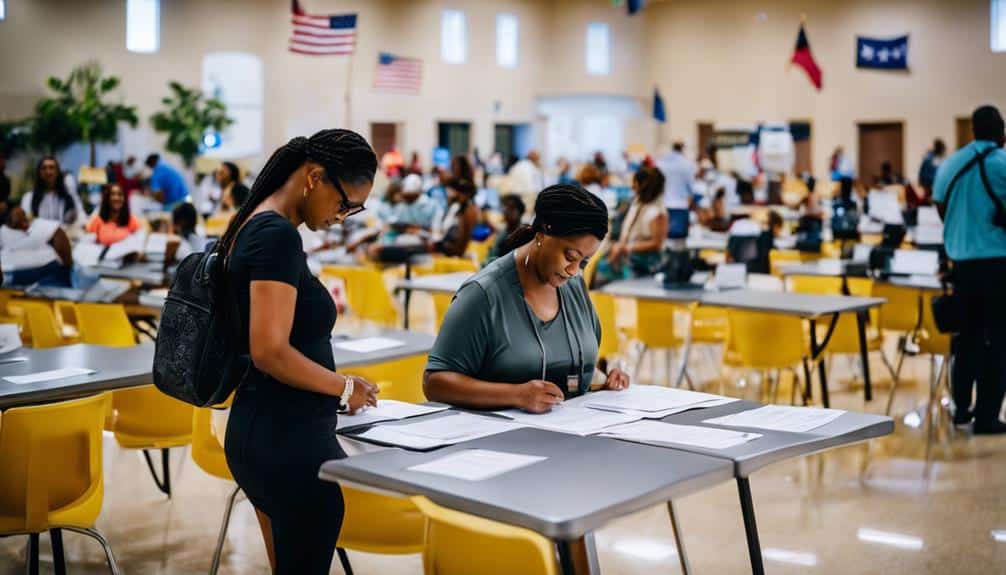
When it comes to voter registration in Florida, understanding voter eligibility requirements is essential. The Secretary of State's office also plays a significant role in implementing online voter registration processes. Ensuring that the voter registration system is accessible and efficient is vital for promoting civic engagement.
Voter Eligibility Requirements
In Florida, voter eligibility requirements for voter registration mandate that individuals must be U.S. citizens, residents of the state, at least 18 years old, not adjudicated mentally incapacitated, and not convicted of a felony without civil rights restored. These criteria guarantee that those registering to vote meet fundamental qualifications necessary for participating in the electoral process. By adhering to these standards, the state aims to uphold the integrity and fairness of elections. As a potential voter, meeting these requirements signifies your readiness to engage in civic duties and have a say in shaping the future. Understanding and fulfilling the voter eligibility criteria not only empowers you to exercise your rights but also contributes to upholding the democratic principles of the state.
Online Voter Registration
As Florida's voter eligibility requirements guarantee that individuals meet essential qualifications for participating in elections, the implementation of online voter registration further enhances accessibility and streamlines the voter registration process. Florida residents can conveniently register to vote or update their information online, making the electoral process more accessible. This 24/7 accessible system reduces paperwork and manual processing, benefiting both citizens and election officials. By allowing individuals to verify and update their details promptly, online voter registration helps maintain accurate voter rolls. Additionally, this method enhances voter engagement by offering a user-friendly and accessible registration process to a broader audience. Online voter registration plays an important role in modernizing voter registration systems and fostering increased participation in the electoral process.
Transparency and Accountability
Promoting transparency and accountability, the Secretary of State in Florida diligently upholds public records and oversees key state divisions. By managing six essential divisions, including Elections and Historical Resources, the Secretary ensures responsibility in state affairs. Serving as the State Protocol Officer and Chief Election Officer, the office maintains openness in its operations. Oversight of the Division of Corporations and Library and Information Services further showcases the Secretary's commitment to promoting responsibility within the state. Upholding public records and managing the state seal are integral parts of ensuring transparency in governmental functions. The Secretary's role in overseeing key divisions like Elections highlights the importance placed on responsibility in the Department of State. Through a dedicated focus on transparency and responsibility, the Secretary of State in Florida fulfills an important responsibility in maintaining the integrity and trustworthiness of state operations.
Historical Record Preservation

As the Secretary of State in Florida, your role in historical record preservation involves overseeing record digitization efforts, archiving important documents, and ensuring access to records. Safeguarding these documents is essential for preserving Florida's historical legacy and allowing the public to explore the state's past. By upholding the integrity and authenticity of historical records, you play a significant part in shaping future decisions and maintaining transparency in governance.
Record Digitization Efforts
In Florida, the Secretary of State leads the digitization efforts for historical records to safeguard the state's valuable heritage. This vital preservation process involves converting physical records into digital formats, guaranteeing their accessibility for future generations. By digitizing these historical records, the Secretary's office enhances transparency and promotes easier public access to essential documents. The digitized records are securely stored, allowing government officials, historians, and the general public to retrieve and research them efficiently. This initiative not only safeguards historical information against damage or loss but also facilitates a more efficient and transparent way of preserving Florida's rich history. The dedication to historical record digitization ensures that these valuable resources remain available for exploration and learning in the years to come.
Archiving Important Documents
The Secretary of State in Florida plays a pivotal role in safeguarding and preserving important historical documents, ensuring the state's rich heritage endures for future generations. This responsibility involves the meticulous archiving of historical documents, including the protection of the state seal to maintain the authenticity of official records. Historical record preservation is essential for safeguarding significant state records, allowing for future reference and research. The office oversees the storage and organization of crucial historical documents dating back to the state's establishment. By diligently archiving these important documents, the Secretary of State in Florida contributes to the preservation of the state's history and heritage, ensuring that it is passed down intact to forthcoming generations.
Ensuring Access to Records
Preserving and organizing historical records in Florida is vital to guaranteeing public access and scholarly exploration of the state's rich heritage. The Secretary of State plays an essential role in safeguarding the cultural legacy of Florida through meticulous preservation efforts. Here are three key ways in which access to historical records fosters a sense of belonging and connection to the past:
- Enabling public engagement: By making historical records accessible, the public can actively participate in uncovering the state's history.
- Fostering educational opportunities: Scholars and researchers have valuable resources to deepen their understanding of Florida's evolution.
- Preserving cultural heritage: Access to historical records ensures that Florida's diverse cultural heritage is protected and celebrated for future generations.
Chief Election Officer

How does the Secretary of State in Florida fulfill the important role of Chief Election Officer? As the Chief Election Officer, the Florida Secretary of State plays a vital role in overseeing the state's electoral processes. This includes ensuring fair and accurate elections, overseeing voter registration procedures, and ensuring compliance with election laws. The Secretary collaborates closely with county supervisors of elections to streamline voting processes and address any issues that may arise during elections. Additionally, the office is responsible for managing election data, maintaining voter rolls, and providing information to the public regarding elections.
Integrity of Elections
Ensuring the integrity of elections in Florida involves meticulous oversight and stringent enforcement of election laws by the Secretary of State. This important task of maintaining the public's trust in the democratic process encompasses various responsibilities:
- Compliance: The Secretary of State ensures strict adherence to election laws, guaranteeing that all voting procedures are conducted fairly and transparently.
- Voter Registration: Overseeing the accuracy and security of voter registration databases is essential to prevent any irregularities in the electoral process.
- Administration of Election Laws: The Secretary implements and enforces election laws to safeguard the voting rights of all eligible individuals in Florida, working diligently to prevent fraud and uphold the accuracy of election results.
Through these efforts, the Secretary of State plays a critical role in upholding the integrity of elections, protecting the democratic rights of citizens, and fostering a sense of belonging and trust in the electoral system.
Governance Safeguarding

The role of the Secretary of State in Florida in safeguarding governance is pivotal to ensuring the smooth operation of state functions and upholding public trust. This critical responsibility involves maintaining public records, overseeing the state seal, and supervising various divisions such as Arts and Culture, Administrative Services, Corporations, Elections, Historical Resources, and Library and Information Services. By serving as the State Protocol Officer and Chief Election Officer, the Secretary plays a vital role in ensuring the integrity of electoral processes and state protocols. Upholding governmental integrity is at the core of the Secretary's duties, emphasizing the importance of promoting transparency and accountability in all governmental functions. Safeguarding governance in Florida involves not only protecting public records and the state seal but also ensuring the efficiency and legitimacy of electoral processes, ultimately contributing to the overall trust and confidence in the state's governance.
Promotion of Voter Participation
In promoting voter participation, the Secretary of State in Florida actively engages in voter education programs and outreach efforts to enhance civic engagement and guarantee accessibility to the electoral process. This essential role involves coordinating with local election officials to ensure smooth access to voter registration and polling locations. Additionally, initiatives like National Voter Registration Day are supported to increase voter engagement and registration rates. The Secretary of State also works diligently to enhance accessibility for voters with disabilities and language barriers, aiming to make the voting process inclusive for all. Efforts are consistently made to streamline voting procedures and provide accurate and up-to-date information to voters, fostering a sense of belonging and empowerment within the community. By prioritizing voter participation through education, outreach, and accessibility, the Secretary of State plays a crucial role in strengthening democracy and ensuring every voice is heard.
Frequently Asked Questions
What Does the Secretary of State for Florida Do?
As the Secretary of State for Florida, you oversee election processes, handle administrative tasks, guarantee legal compliance for corporate filings, manage voting registration, and monitor campaign finance. Your role also involves government relations, public affairs, and promoting international relations through diplomatic missions. Overall, your primary duty is to serve the people of Florida by maintaining public records, managing the state seal, and overseeing various divisions within the state government.
What Are the Duties of the Secretary of State?
When looking at the duties of the Secretary of State, you'll find essential tasks like election oversight, business registration, notary services, managing cultural affairs, and maintaining public records. These responsibilities showcase the diverse and critical roles this office plays in ensuring transparency, business operations, and cultural promotion. The Secretary of State in Florida upholds these duties with dedication and integrity to serve you and all residents effectively.
What Powers Does the Secretary of State Have?
When you ponder the powers of the Secretary of State, consider this: their executive authority extends to various legal responsibilities, such as overseeing administrative functions and electoral processes. Additionally, the Secretary plays an important role in diplomatic relations, representing the state's interests on the global stage. These combined duties showcase the diverse and impactful scope of influence wielded by the Secretary of State in Florida.
What Does the Department of State Do in Florida?
In Florida, the Department of State manages voter registration, business licensing, document authentication, notary services, and civic education. It plays an important role in ensuring transparent elections, supporting business growth, and providing essential services to the public. These functions are essential for maintaining the integrity of the state's records, promoting civic engagement, and facilitating various legal processes for individuals and businesses alike.